July 9, 2026
Best Liquidation Pallets for Beginners
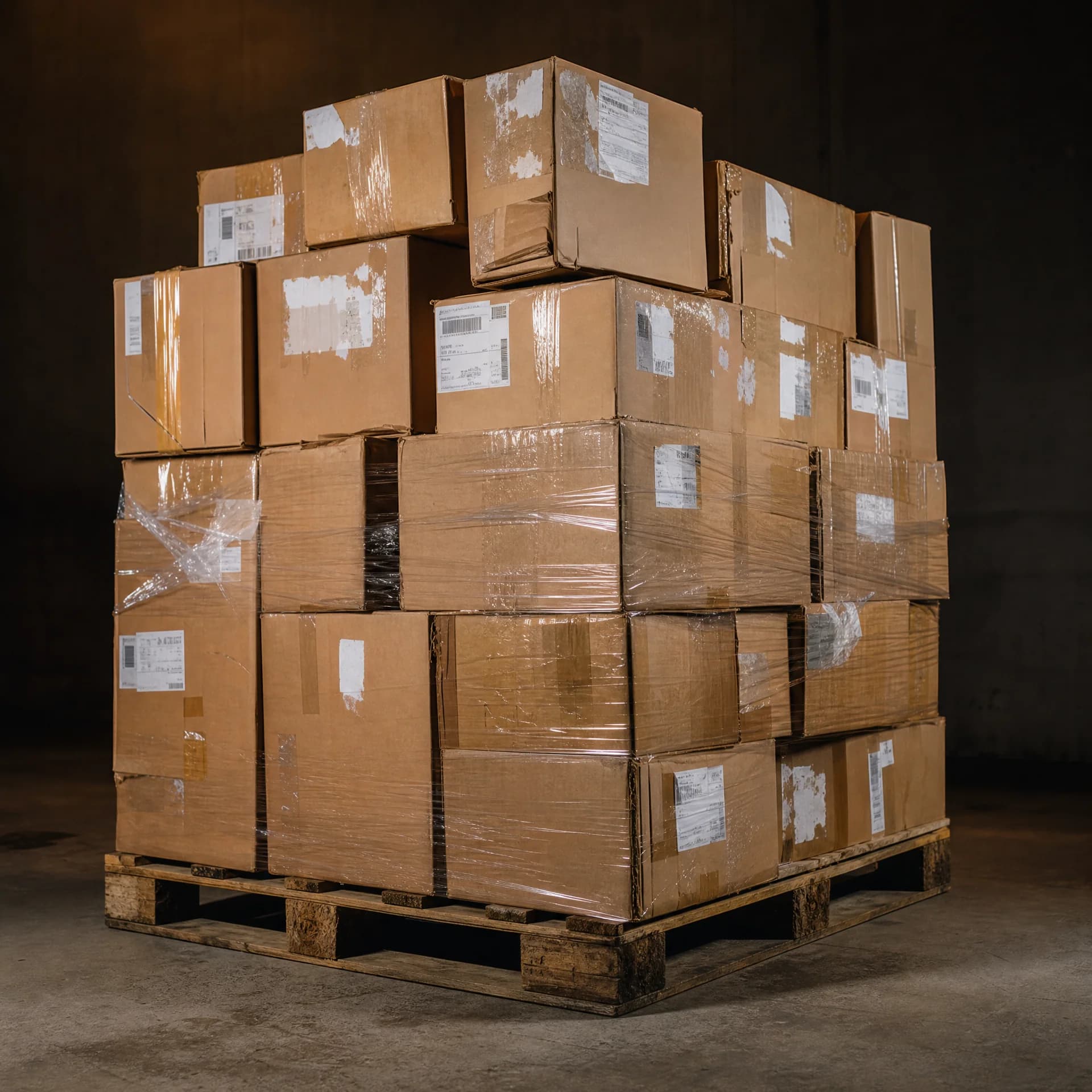
Liquidation pallets look simple from the outside: pay a fraction of retail value, resell the contents, keep the difference. In practice, your first pallet teaches you more than any guide can — but starting with the right category and the right expectations is what separates a profitable first order from a discouraging one.
Why category choice matters more than price
Every liquidation pallet is priced against its retail value and condition, so a "cheap" pallet isn't automatically a good deal — and an expensive one isn't automatically a bad one. What actually determines your outcome as a beginner is how predictable the contents are.
Some categories are inherently more variable than others. A mixed-merchandise pallet might contain anything from kitchenware to toys to seasonal decor, which makes pricing and reselling harder to plan around. A single-category pallet — all electronics, all tools, all one retailer's returns — is easier to research, price, and list before it even arrives.
Categories that suit first-time buyers
Amazon return pallets
Amazon return pallets are a strong starting point because Amazon's own listing data (titles, categories, original prices) is public — you can often identify manifest items before you buy and get a realistic sense of resale value on marketplaces buyers already use.
Electronics liquidation pallets
Electronics liquidation pallets carry higher per-unit value, which means fewer, easier-to-manage items per pallet compared to a 200-item mixed lot. The tradeoff is technical risk — a portion of returned electronics won't power on, so budget for some dead units in your resale math rather than assuming every unit sells.
Individual items, if pallets feel like too much at once
If a full pallet feels like a lot to manage on a first order, individual electronics let you start smaller — single units, individually condition-graded, with no manifest to parse and no pallet-splitting logistics.
What to check before you buy
- Condition grading. "Customer returns" means functional-but-used; "shelf pulls" means never sold but pulled from a planogram reset; "salvage" means sold as-is, parts-or-repair. Match the grade to your resale channel — salvage items don't belong on a marketplace expecting working goods.
- The manifest. Whenever one's available, download it before buying. It tells you item count, categories, and — on request — often unit-level detail. Skipping this step is the single most common beginner mistake.
- Estimated item count vs. your time. A 110-item mixed pallet takes far longer to sort, photograph, and list than a 40-item electronics pallet at the same price point. Time is a real cost even when it's not a dollar figure on the invoice.
- Freight, not just price. A pallet is freight-shipped, not parcel-shipped. Use the freight estimator before you buy so the delivered cost — not just the sticker price — is what you're comparing against expected resale.
Mistakes almost every first-time buyer makes
Anchoring on retail value instead of resale value
The savings percentage on a listing is calculated against retail value, and it's easy to let that number do your thinking for you. A pallet showing "76% off retail" sounds like an obvious win — but 76% off retail and what you'll actually collect reselling the contents are two different numbers. Retail value is a ceiling, not a forecast. Treat it as context, not as your expected return.
Buying bigger than you can process
It's tempting to go straight for a high-item-count pallet because the per-item price looks tiny. In practice, 150 unsorted items sitting in a garage for six weeks because you haven't had time to photograph and list them is a worse outcome than 40 items fully processed and sold in two. Match pallet size to the time you actually have, not the time you hope to find.
Ignoring condition variance within a single pallet
Even a well-graded pallet is an average, not a guarantee on every item. A "customer returns" pallet graded accurately overall can still contain a handful of units in noticeably better or worse shape than the label suggests. Budget mentally for that spread rather than assuming uniform condition across every unit.
Skipping a dry run on pricing
Before your pallet even arrives, spend twenty minutes researching resale prices for a handful of items you expect to see, based on the manifest or category description. If your assumed resale value doesn't hold up against real current listings for similar items, revise your resale rate assumption downward before you're emotionally invested in a delivered pallet.
Running the numbers before you commit
Retail value and savings percentage look good on every listing — that's the point of liquidation pricing. What matters is what you can actually recover. Before buying, run your numbers through the profit calculator: enter the pallet price, retail value, a conservative resale rate (30-40% is a reasonable first-timer assumption, not the optimistic case), and freight cost. If the number that comes out still works for you, you're buying with real expectations instead of retail-value optimism.
The savings calculator is worth a quick check too — it's the simpler, faster version of the same idea, useful for comparing multiple pallets side by side before you dig into full profit modeling on your shortlist.
Setting a realistic first budget
There's no universal "right" amount to spend on a first pallet, but there is a useful way to think about it: spend an amount where a worse-than-expected outcome is a learning expense, not a financial setback. If a total loss on your first order would be genuinely painful, the order is too large for a first attempt — regardless of how good the projected ROI looks on paper. Liquidation rewards buyers who stay in the game long enough to learn its patterns, and that requires surviving a mediocre first pallet without it ending your buying altogether.
Track your results, not just your gut feeling
After your first pallet sells through, write down three numbers: what you actually spent (price plus freight), what you actually collected in sales, and how many hours you put into sorting and listing. Compare that real resale rate against the assumption you used going in. This single habit — checking assumption against actual outcome — is what turns a first pallet into useful data instead of just an experience. Buyers who do this consistently get measurably better at picking pallets within two or three orders, because they're calibrating real numbers instead of guessing every time.
Frequently asked questions
Do I need a business license to buy liquidation pallets? Requirements vary by seller and by how you plan to resell. Some liquidation sources require a resale certificate for tax-exempt wholesale purchases; check the specific requirements before your first order rather than assuming either way.
How long does it take to sell through a first pallet? It depends heavily on item count and category, but budget more time than feels intuitive — sorting, testing, photographing, listing, and actually selling 40-100 items is measured in weeks, not days, for most first-time buyers working part-time on it.
What if an item in the pallet is missing or doesn't match the manifest? Policies vary by seller. Read the terms on manifest accuracy before buying, and keep records (photos, the manifest itself) as you unpack, in case discrepancies need to be raised.
A realistic first order
A sensible first pallet: single-category, manifested, customer-returns or shelf-pull condition, priced so that even a conservative 30% resale rate still nets a profit after freight. That's not the most exciting pallet on the site, but it's the one that teaches you how the business actually works — sorting, grading, listing, and selling — without betting more than you're ready to lose on a category you don't understand yet.
Once you've run one or two orders through that process, the mixed pallets, higher-value electronics lots, and bulk truckloads stop being a gamble and start being a calculation you already know how to make.