July 9, 2026
Return Pallets vs Shelf Pulls: What's the Difference?
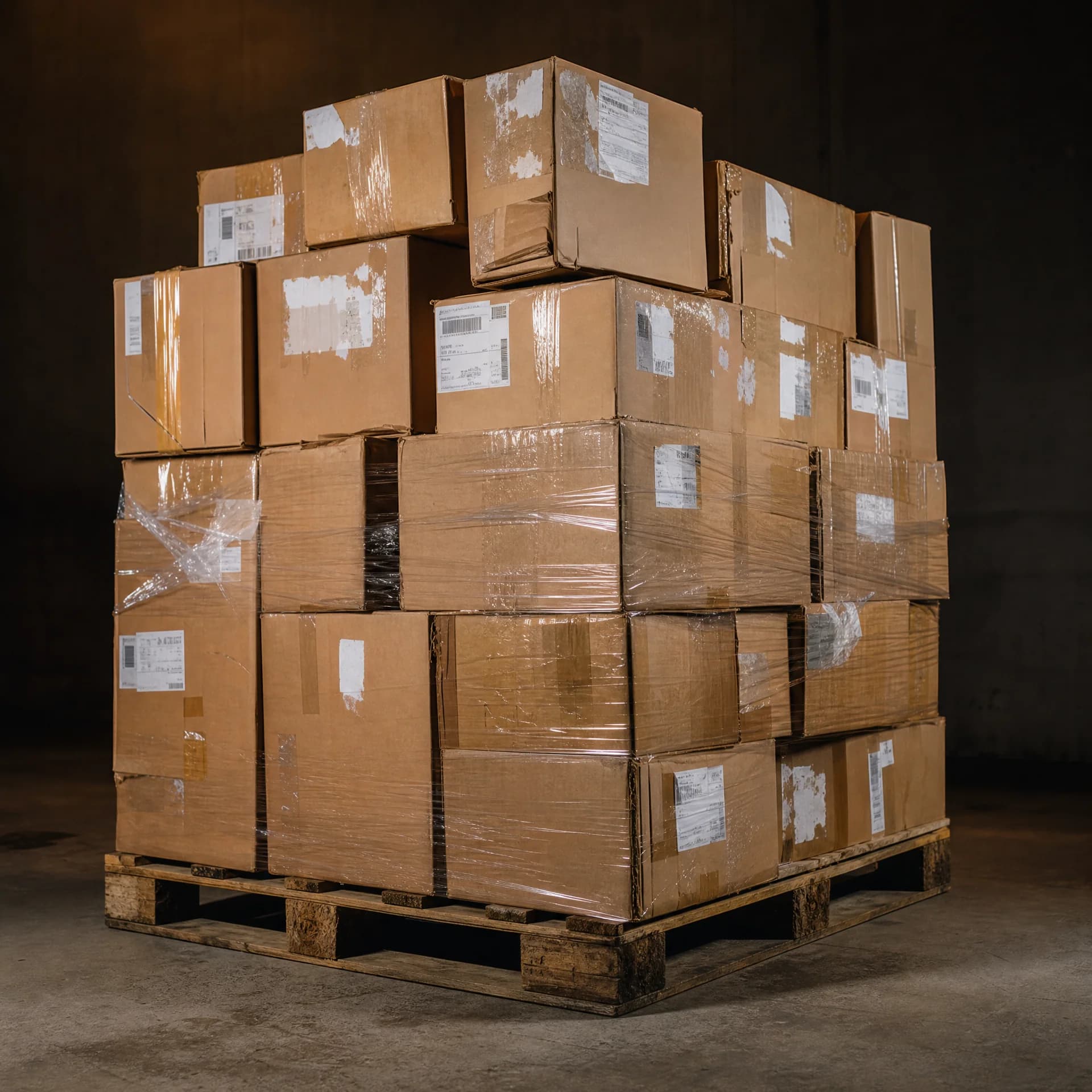
"Customer returns" and "shelf pulls" are the two condition grades you'll see most often on liquidation pallets, and confusing them is one of the fastest ways to misjudge a deal. They come from different points in the retail supply chain, carry different risk profiles, and suit different resale strategies.
Where each one comes from
Return pallets
Return pallets are exactly what the name says: merchandise a retail customer bought, then sent back. Reasons vary — wrong size, changed their mind, arrived damaged, didn't work as expected, or simply "didn't want it anymore." Retailers process an enormous volume of these, and most can't be economically restocked and resold at full price, so they're liquidated in bulk instead.
Shelf pulls
Shelf pulls never reached a customer at all. They're pulled directly from retail shelves — for a planogram reset, seasonal changeover, discontinued SKU, or simply excess inventory that needs to move. A shelf-pull item was never opened, never used, and never returned. It's liquidated purely because the retailer needs the shelf space or is exiting that SKU.
How condition actually differs
This is where the two grades diverge in ways that matter for resale:
Return pallets are a mixed bag by nature. Some items are genuinely unused (buyer's remorse returns with original packaging intact). Others show real wear, missing parts, or don't function at all. A well-run liquidator inspects and grades what they can, but at pallet-lot volume, some uncertainty is priced in — that's part of why return pallets carry a steeper discount off retail value than shelf pulls do.
Shelf pulls are far more consistent. Because the item was never opened or used, the main risks are cosmetic (shelf wear, dusty packaging, discontinued styling) rather than functional. You're far less likely to receive a dead unit in a shelf-pull lot than in a returns lot.
Where they sit among other condition grades
Return pallets and shelf pulls are the two most common grades, but they're not the only two. A quick map of where they fit:
- New — factory-sealed, never on a shelf, closest to standard retail condition. Rare in liquidation and priced accordingly.
- Shelf pulls — never sold, pulled from the shelf. Covered above.
- Open box — sold, then returned unopened or lightly inspected by the retailer, often close to shelf-pull condition but technically has a prior owner on record.
- Customer returns — the returns grade covered above; functional-but-used, mixed condition.
- Overstock — excess inventory that never sold, similar risk profile to shelf pulls but liquidated for inventory-management reasons rather than a specific reset.
- Mixed — a pallet spanning multiple condition grades, priced to reflect that blend.
- Salvage — sold as-is, parts-or-repair; the steepest discount and the highest functional risk, suited only to buyers equipped to test, repair, or part out.
Return pallets and shelf pulls dominate the market because they represent the two largest, most consistent supply streams retailers generate — which is also why they're worth understanding in detail before you branch into the less common grades.
What this means for pricing and resale rate
If you've read our guide on how to calculate pallet profit, you know that resale rate — the percentage of retail value you actually expect to recover — is the biggest driver of your profit estimate. Condition grade is the biggest driver of resale rate.
As a rough starting point when modeling deals in the profit calculator:
- Shelf pulls: higher resale rate is defensible (often 55-70%), since functional risk is low and items typically look close to new
- Customer returns: more conservative resale rate is safer (often 30-45%), since a real portion of the lot may be non-functional, incomplete, or heavily used
These are starting points, not guarantees — always check the manifest and, where available, the retailer or category-specific grading notes on the listing.
Which one fits your resale channel?
Shelf pulls suit channels with less tolerance for returns or complaints — retail arbitrage, marketplace listings where "like new" claims need to hold up, or any resale format where a non-functional unit becomes a costly return-shipping problem for you.
Return pallets suit buyers set up to test, refurbish, or bundle — flea markets and local marketplace sales where buyers expect "used, as-is" pricing, resellers with the tooling to test electronics before listing, or bulk/bundle resale where a few dead units don't sink the whole lot's economics.
Neither is objectively "better" — they're priced differently because they carry different risk, and the right choice depends on how much inspection and testing capacity you have on your end versus how much certainty you're paying for upfront.
Inspecting each grade on delivery
Your inspection priorities should differ by grade. On a shelf-pull pallet, focus on packaging condition and cosmetic wear — the functional risk is already low, so your time is better spent checking for shelf damage or discontinued-model mismatches against the manifest. On a returns pallet, prioritize functional testing first: power on electronics, check for missing components against the box contents list, and separate obviously-resalable items from ones needing further evaluation before you invest time photographing and listing anything.
Either way, do this inspection before you commit significant time to listing individual items — sorting the pallet into "ready to list," "needs testing," and "parts only" piles on day one saves far more time than discovering problems item-by-item as you go.
A quick decision guide
If you're weighing a specific pallet and unsure which grade fits your plan, ask: what happens if a unit doesn't work? If the answer is "I can't easily test it and a complaint would hurt my resale reputation," lean shelf-pull or open-box. If the answer is "I can test, refurbish, or bundle it into a lower-price lot," return pallets open up more volume at a steeper discount for the same budget.
Frequently asked questions
Can a single pallet contain both shelf-pull and returns items? Yes — pallets graded "mixed" condition combine multiple grades, and even single-grade pallets can have some variance, since grading happens at scale rather than unit-by-unit in every case. The listed condition grade reflects the predominant or average condition, not a guarantee on every item.
Is open-box the same as shelf-pull? Close, but not identical. Shelf-pull items were never sold. Open-box items were sold and returned, but returned unopened or with only light inspection by the retailer — functionally similar risk to shelf-pull in most cases, but technically a different point in the supply chain.
Which grade has better resale value per dollar spent? Neither is universally better — shelf-pulls cost more per unit of retail value but carry less functional risk, while returns cost less per unit but require more inspection effort. The right choice depends on your resale channel's tolerance for occasional non-functional units, as covered above.
Browse by condition
Both grades are available across categories — check Amazon return pallets for customer-returns lots, or electronics liquidation pallets for a mix of both grades depending on the specific pallet. Every listing shows its condition grade clearly, and the manifest (where available) will tell you the retailer and category mix before you commit.
Once you know which grade fits your resale model, comparing pallets gets a lot faster — you're no longer weighing unknowns, just price against a risk profile you already understand.