July 9, 2026
How Freight Shipping Works for Liquidation Pallets
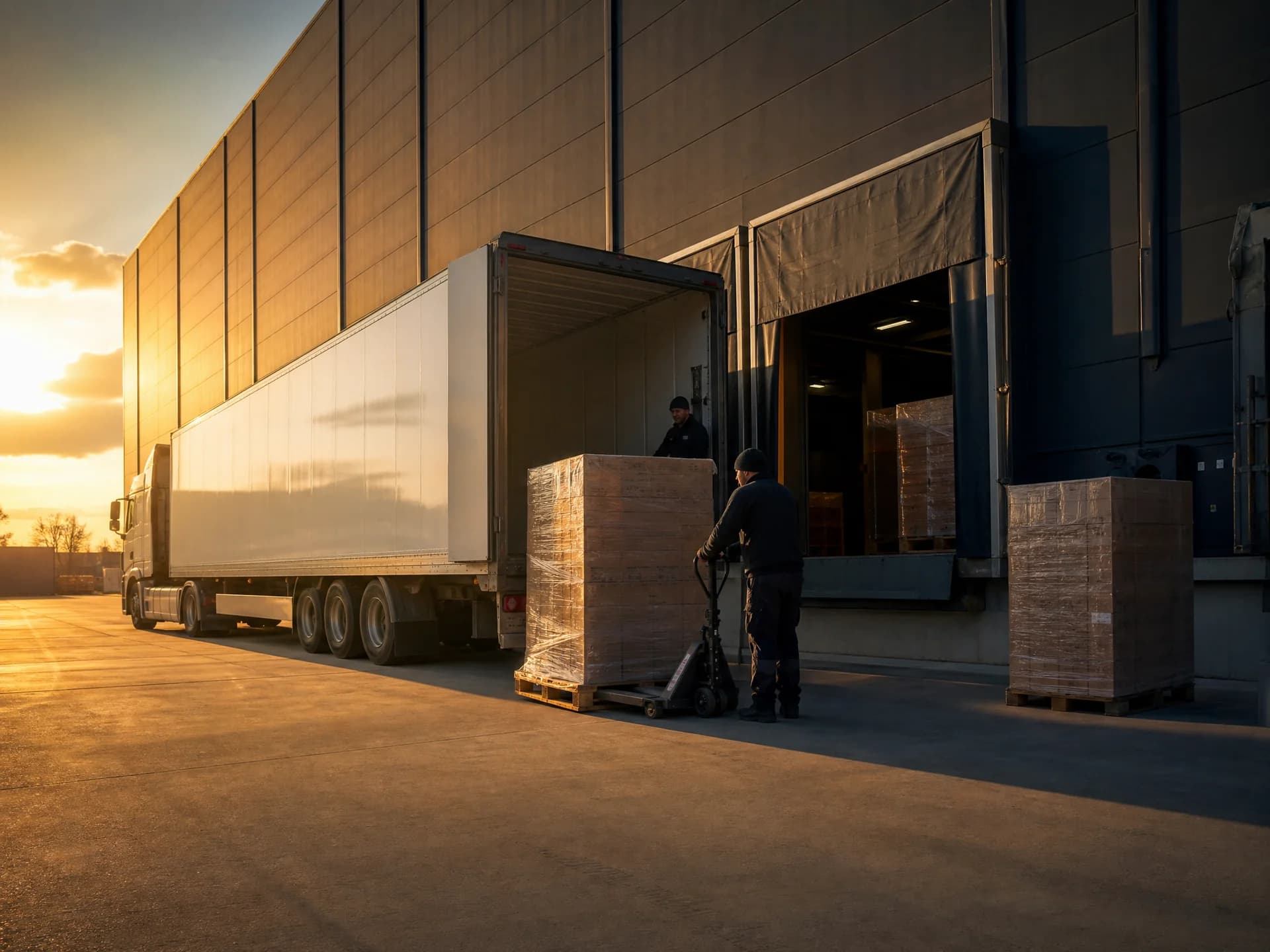
A pallet of liquidation inventory doesn't arrive in a cardboard box on your porch — it ships freight, on a truck, on a pallet. If you've never received a freight shipment before, the process (and the cost) can be genuinely confusing the first time. Here's how it actually works.
Why pallets ship LTL, not parcel
LTL stands for "less-than-truckload" — freight shipping for loads that don't fill an entire trailer, shared with other shippers' freight on the same route. A single pallet, or even a few, almost always ships LTL rather than as a dedicated full truckload.
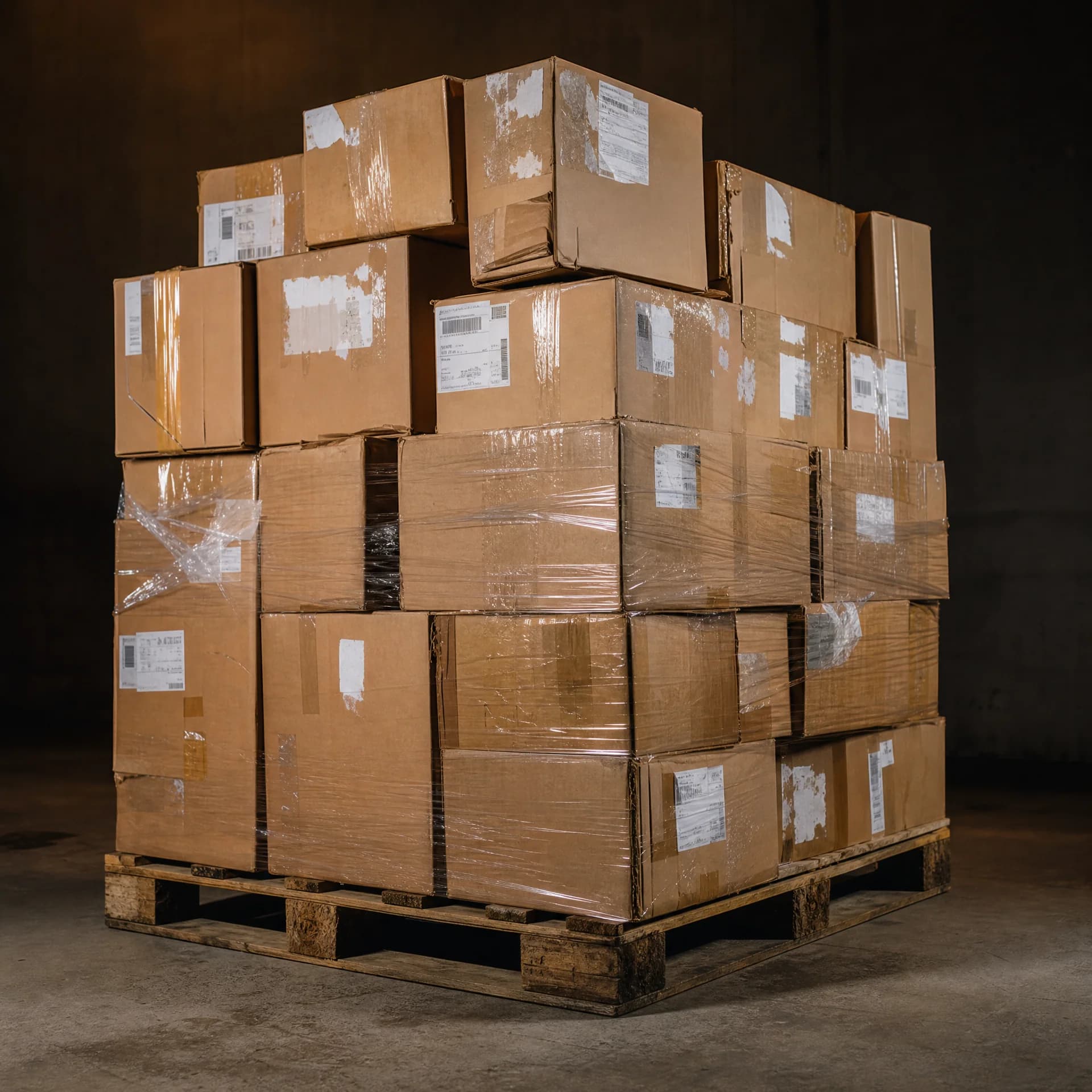
Parcel carriers (the trucks that deliver small packages) are built around individually-scannable boxes under roughly 150 lbs. A liquidation pallet is banded or shrink-wrapped as a single unit, often several hundred pounds, sized for forklift or pallet-jack handling — it simply doesn't fit the parcel system. That's why freight, not parcel, is the default for pallet-quantity liquidation orders.
What drives freight cost
Freight pricing is quoted primarily on:
- Weight — the single biggest factor. Heavier pallets cost more to ship, and the relationship isn't perfectly linear — carriers price in weight brackets.
- Dimensions — very large or oddly-shaped pallets can trigger "dimensional weight" pricing even if actual weight is moderate.
- Origin and destination — distance and lane demand between the shipping warehouse and your delivery address.
- Accessorials — extra services like liftgate delivery (if you don't have a loading dock), residential delivery, or inside delivery, each added on top of base freight.
You can get a fast, weight-based starting estimate with our freight estimator before you buy — it won't replace an exact quote, but it tells you whether freight is likely to be a rounding error or a meaningful chunk of your total cost.
A quick freight terms glossary
- LTL (Less-Than-Truckload): freight shipped alongside other shippers' loads on a shared trailer, priced by weight and space rather than a full-truck rate.
- Freight class: a standardized classification (based on density, value, and handling difficulty) carriers use alongside weight to price a shipment. Denser, more compact freight generally rates lower than bulky, low-density freight of the same weight.
- Liftgate: a hydraulic platform on the back of a freight truck that lowers a pallet to ground level — required if the delivery address has no loading dock.
- Accessorial: any add-on freight service beyond standard dock-to-dock delivery — liftgate, residential delivery, inside delivery, or notification/appointment scheduling are all common accessorials.
- BOL (Bill of Lading): the shipping document that accompanies freight, listing contents, weight, and terms — worth keeping until you've confirmed the delivery matches what shipped.
Getting an exact quote
Estimators are useful for early planning, but exact freight cost depends on your specific ZIP code, delivery type, and the carrier's current rates. On any pallet listing, use Request Freight Quote to get a firm number from our team before you commit — this is the number to plug into your profit calculator run, not the estimator range.
What to expect on delivery day
Freight delivery is a different experience than a parcel drop-off, and knowing what's coming avoids a stressful surprise:
- You'll typically get a delivery window, not an exact time — freight carriers run multi-stop routes and can't promise a precise hour the way parcel tracking sometimes implies.
- Liftgate matters if you don't have a loading dock. Standard freight trucks are dock-height; without a liftgate (a hydraulic platform that lowers the pallet to ground level) or a dock to receive at, you may not be able to unload. Confirm liftgate service if you're receiving at a residential or non-dock address — it's usually an add-on, not a default.
- You need a way to move the pallet once it's on the ground. A pallet jack is the minimum; a forklift makes it trivial. Plan this before delivery day, not during it.
- Inspect before you sign. Freight carriers generally require noting visible damage on the delivery receipt at the time of delivery — signing "clean" for an obviously damaged pallet can complicate a damage claim later.
Preparing your receiving location before you buy
If this is your first freight delivery, a few minutes of preparation avoids a delivery-day scramble:
- Confirm whether your address can receive dock-height freight or needs a liftgate, and add that accessorial when requesting your quote — not after the truck is already scheduled.
- Clear a path and confirm ground surface. Pallet jacks need a reasonably flat, unobstructed surface from the truck to your storage area — gravel, steep inclines, or stairs complicate manual pallet moving significantly.
- Have a plan for the pallet itself, not just the goods on it. Wood pallets are heavy and awkward to dispose of — some buyers arrange pickup or recycling in advance rather than discovering a 40 lb pallet taking up garage space indefinitely.
- Be available for the delivery window, or arrange for someone who can receive and inspect on your behalf — missed freight appointments often mean rescheduling fees or redelivery charges.
Pickup as an alternative
Some pallets offer local pickup instead of freight delivery — check the "Pickup Available" field on the listing. If you're within reasonable driving distance and have a vehicle (or trailer) suited to pallet-quantity freight, pickup eliminates freight cost entirely, though you'll need your own loading equipment at the pickup end too. Pickup is often the better choice for buyers close to the shipping warehouse who want to inspect the pallet in person before finalizing the purchase, since it removes both freight cost and freight damage risk from the equation.
Frequently asked questions
Can I use my own freight carrier instead of the one arranged by the seller? This varies by seller — some allow buyer-arranged freight (sometimes called "third-party billing"), others handle freight in-house as part of the transaction. Confirm before assuming you can substitute your own carrier or account.
Does freight cost change if I buy multiple pallets at once? Often, yes — multiple pallets shipping together to the same destination can sometimes achieve better per-pallet freight economics than the same pallets shipped separately, since fixed costs of a shipment get spread across more weight. Ask about combined shipping if you're ordering more than one pallet.
What happens if freight arrives damaged? Note any visible damage on the delivery receipt before signing, photograph the damage, and contact the seller promptly — most freight damage claims require documentation from the moment of delivery, not after the fact.
Is freight cost negotiable? Base LTL rates are largely set by carrier pricing and current market conditions, but accessorials (liftgate, appointment scheduling, residential fees) sometimes have flexibility depending on the seller's freight arrangements. It's always worth asking when requesting a quote rather than assuming the first number is final.
Building freight into your numbers early
The biggest freight-related mistake isn't the shipping process itself — it's forgetting to include it in profit math until after checkout. Freight is a real line item in both the ROI and margin calculations, not an afterthought. Get a real quote, run it through your numbers, and you'll never be surprised by what a pallet actually costs you delivered — on categories from Amazon return pallets to bulkier electronics liquidation pallets alike.